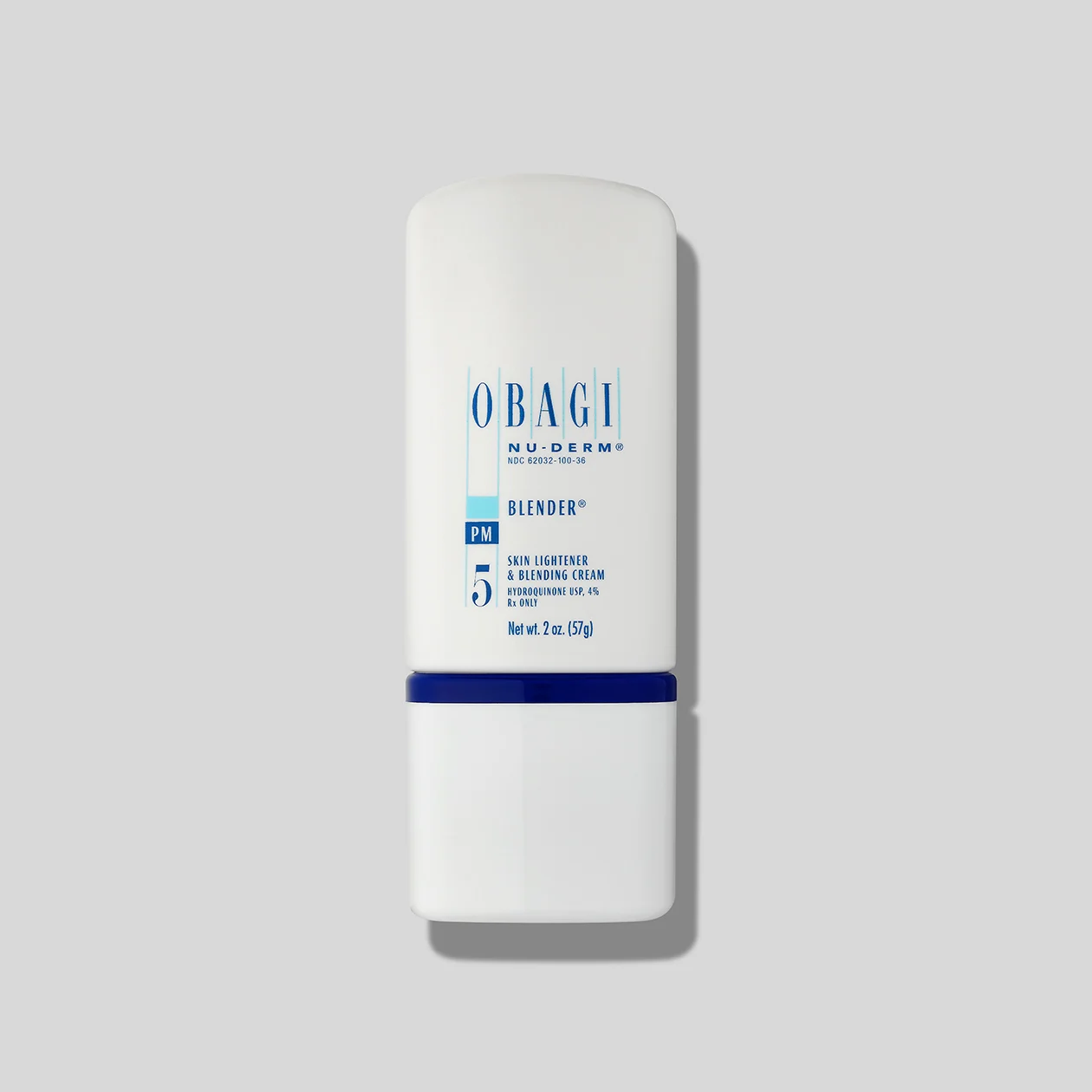
Obagi Nu-Derm® BLENDER RX
Serums & Treatments
Obagi Nu-Derm® BLENDER RX
$140.00
Effective prescription 4% hydroquinone that helps correct hyperpigmentation, such as dark spots, sun spots, age spots, melasma, and other types of discoloration, for a healthier-looking, more even skin tone.
Out of stock
Ingredients
HYDROQUINONE 4%
Strong inhibitor of melanin production that has long been established as the most effective ingredient for reducing and potentially eliminating melasma.
Each gram of Obagi Nu-Derm Blender contains the following ingredients.
ACTIVE INGREDIENT: hydroquinone, USP 4% (40 mg/g)
INACTIVE INGREDIENTS: ascorbic acid, BHT, cetyl alcohol, disodium EDTA, glycerin, lactic acid, methylparaben, phenyl trimethicone, PPG-2 myristyl ether propionate, propylparaben, saponins, sodium lauryl sulfate, sodium metabisulfite, TEA-salicylate, tocopheryl acetate, water (aqua)
ACTIVE INGREDIENT: hydroquinone, USP 4% (40 mg/g)
INACTIVE INGREDIENTS: ascorbic acid, BHT, cetyl alcohol, disodium EDTA, glycerin, lactic acid, methylparaben, phenyl trimethicone, PPG-2 myristyl ether propionate, propylparaben, saponins, sodium lauryl sulfate, sodium metabisulfite, TEA-salicylate, tocopheryl acetate, water (aqua)
Safety Information
IMPORTANT SAFETY INFORMATION
Obagi Nu-Derm Clear, Blender and Sunfader (contains 4% hydroquinone)
CONTRAINDICATIONS: People with prior history of sensitivity or allergic reaction to this product or any of its ingredients should not use it. The safety of topical hydroquinone use during pregnancy or in children (12 years and under) has not been established.
WARNINGS Hydroquinone is a skin-bleaching agent, which may produce unwanted cosmetic effects if not used as directed. The physician should be familiar with the contents of this insert before prescribing or dispensing this product. Test for skin sensitivity before using by applying a small amount to an unbroken patch of skin and check within 24 hours. Minor redness is not a contraindication, but where there is itching or vesicle formation or excessive inflammatory response, product should be discontinued and physician consulted. Close patient supervision is recommended. Avoid contact with eyes, nose, mouth, or lips. In case of accidental contact, patient should rinse eyes, nose, mouth or lips with water and contact physician. Sunscreen use is an essential aspect of hydroquinone therapy because even minimal sunlight exposure sustains melanocytic activity. Contains sodium metabisulfite, a sulfite that may cause allergic-type reactions including anaphylactic symptoms and life-threatening or less severe asthmatic episodes in certain susceptible people. The overall prevalence of sulfite sensitivity in the general population is unknown and probably low. Sulfite sensitivity is seen more frequently in asthmatic than in nonasthmatic people.
PRECAUTIONS Treatment should be limited to relatively small areas of the body at one time since some patients experience a transient skin reddening and a mild burning sensation which does not preclude treatment.
Pregnancy Category C Animal reproduction studies have not been conducted with topical hydroquinone. It is also not known whether hydroquinone can cause fetal harm when used topically on a pregnant woman or affect reproductive capacity. It is not known to what degree, if any, topical hydroquinone is absorbed systemically. Topical hydroquinone should be used on pregnant women only when clearly indicated.
Nursing Mothers It is not known whether topical hydroquinone is absorbed or excreted in human milk. Caution is advised when topical hydroquinone is used by a nursing mother.
Pediatric Usage Safety and effectiveness in children below the age of 12 years have not been established.
ADVERSE REACTIONS No systemic adverse reactions have been reported. Occasional hypersensitivity (localized contact dermatitis) may occur, in which case the product should be discontinued and the physician notified immediately.
DOSAGE AND ADMINISTRATION A thin application should be applied to the affected area twice daily or as directed by a physcian. If no improvement is seen after 8-12 weeks of treatment, use of this product should be discontinued. Sun exposure should be limited by using a sunscreen agent, a sunblocking agent, or protective clothing to cover bleached skin when using and after using this product in order to prevent repigmentation.
CONTRAINDICATIONS: People with prior history of sensitivity or allergic reaction to this product or any of its ingredients should not use it. The safety of topical hydroquinone use during pregnancy or in children (12 years and under) has not been established.
WARNINGS Hydroquinone is a skin-bleaching agent, which may produce unwanted cosmetic effects if not used as directed. The physician should be familiar with the contents of this insert before prescribing or dispensing this product. Test for skin sensitivity before using by applying a small amount to an unbroken patch of skin and check within 24 hours. Minor redness is not a contraindication, but where there is itching or vesicle formation or excessive inflammatory response, product should be discontinued and physician consulted. Close patient supervision is recommended. Avoid contact with eyes, nose, mouth, or lips. In case of accidental contact, patient should rinse eyes, nose, mouth or lips with water and contact physician. Sunscreen use is an essential aspect of hydroquinone therapy because even minimal sunlight exposure sustains melanocytic activity. Contains sodium metabisulfite, a sulfite that may cause allergic-type reactions including anaphylactic symptoms and life-threatening or less severe asthmatic episodes in certain susceptible people. The overall prevalence of sulfite sensitivity in the general population is unknown and probably low. Sulfite sensitivity is seen more frequently in asthmatic than in nonasthmatic people.
PRECAUTIONS Treatment should be limited to relatively small areas of the body at one time since some patients experience a transient skin reddening and a mild burning sensation which does not preclude treatment.
Pregnancy Category C Animal reproduction studies have not been conducted with topical hydroquinone. It is also not known whether hydroquinone can cause fetal harm when used topically on a pregnant woman or affect reproductive capacity. It is not known to what degree, if any, topical hydroquinone is absorbed systemically. Topical hydroquinone should be used on pregnant women only when clearly indicated.
Nursing Mothers It is not known whether topical hydroquinone is absorbed or excreted in human milk. Caution is advised when topical hydroquinone is used by a nursing mother.
Pediatric Usage Safety and effectiveness in children below the age of 12 years have not been established.
ADVERSE REACTIONS No systemic adverse reactions have been reported. Occasional hypersensitivity (localized contact dermatitis) may occur, in which case the product should be discontinued and the physician notified immediately.
DOSAGE AND ADMINISTRATION A thin application should be applied to the affected area twice daily or as directed by a physcian. If no improvement is seen after 8-12 weeks of treatment, use of this product should be discontinued. Sun exposure should be limited by using a sunscreen agent, a sunblocking agent, or protective clothing to cover bleached skin when using and after using this product in order to prevent repigmentation.
How To Use
- Use daily, in the evening.
- Squeeze a small amount (approximately 1-2 pea-size drops) onto your hand.
- Apply evenly to the entire face, or as directed by your skin care physician.
- If no improvement is seen after three (3) months of treatment, use of this product should be discontinued.